

01
Products


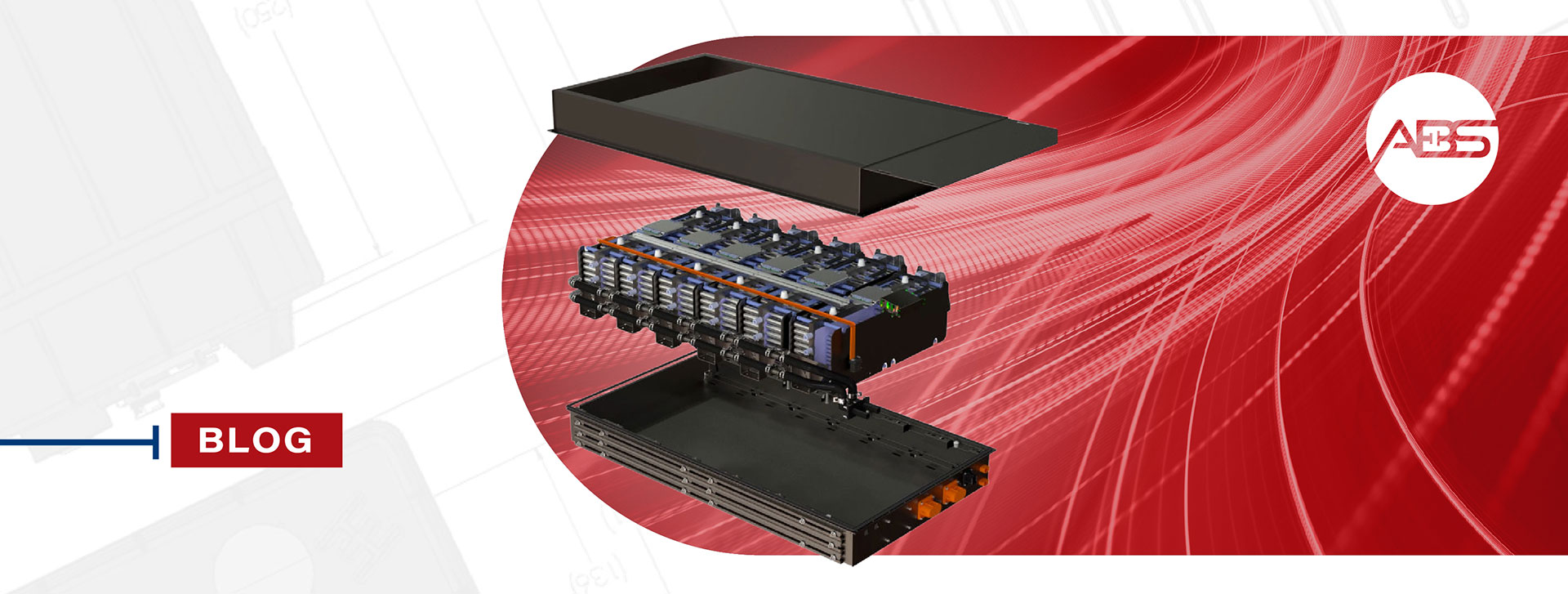
As electrification gains momentum across commercial and industrial markets, OEMs are rethinking their approach to delivering high-performance, cost-efficient power systems without reinventing the wheel for every new vehicle or machine.
For OEMs looking to electrify complex, high-demand applications, battery architectures with flexibility, speed to market and long-term adaptability built-in are critical. That’s where modularity and scalability come in.
Joe Salani, Senior Manager of Application Engineering at American Battery Solutions (ABS), breaks down why modularity and scalability matter; how they accelerate electrification; and why ABS’ Proliance Intelligent Battery Series® is designed specifically to give OEMs a faster, more flexible path to market.
Modularity isn’t just an engineering preference — it’s a strategic advantage.
At the core of the ABS approach is a shared module architecture used across both 350V and 700V battery systems, allowing teams to scale energy and voltage without redesigning the entire system.
OEMs can meet diverse performance requirements quickly, consistently and cost-effectively.
Traditional battery systems often require new designs for every vehicle variant.
A modular platform avoids this by letting OEMs adjust:
Less engineering start-over, shorter development cycles and better alignment with fast-moving market expectations.
ABS offers both standardized off-the-shelf battery systems and fully customized designs.
To determine the right fit, the ABS team evaluates OEM requirements against existing systems and builds a practical road map:
Often, a variant of an existing system is the fastest, most economical path. When necessary, ABS builds solutions from the ground up.
One of the biggest integration advantages: ABS systems do not require a master controller when multiple packs are used in parallel. The Battery Management System (BMS) oversees the entire architecture, enabling OEMs to connect up to 10 systems in parallel with simplified integration.
More energy, fewer components and an easier path to platform-wide scalability.
Customized battery systems built on proven, validated processes and components don’t compromise performance — they enhance it.
ABS relies on:
These building blocks minimize additional testing, ensure safety integrity and allow specialized platforms to move quickly through development.
ABS engineers bring decades of automotive-grade expertise — where precision, validation and safety are paramount. That experience shapes every Proliance® system, creating designs that are:
At ABS, modularity and rigor go hand in hand.
OEMs increasingly need platforms that can grow with their product road map.
Because Proliance® uses 21700 cell formats with both high-energy and high-power variants, customers can shift between performance profiles with minimal redesign.
This gives OEMs:
As electrification continues to evolve, modular and scalable battery systems will be essential for OEMs that want to keep pace with technology and market demand.
The modular architecture of ABS has enabled multiple OEMs to reconfigure the same core building blocks into solutions tailored for unique applications — simply by adjusting series/parallel combinations, pack counts or auxiliary components.
In short, modularity is the new speed, and ABS is helping OEMs meet the moment with flexible, validated battery systems engineered for heavy-duty performance. Learn how ABS can help meet your energy needs by contacting us at americanbatterysolutions.com/contact.


